
Understanding the Cultural Significance of the Zuni Sunface


The Sunface is a sacred Native American symbol most closely associated with the Zuni Pueblo and their revered “Sun Father.” It represents life, warmth, stability, prosperity, and the natural balance of the world. Frequently featured in Southwestern jewelry and art, the design typically includes a circular face, rectangular eyes, a round mouth, and a divided forehead symbolizing both sunrise and sunset. Deeply rooted in Zuni tradition, the Sunface honors the sun’s essential role in agriculture, sustaining life, and bringing peace, happiness, and abundance.

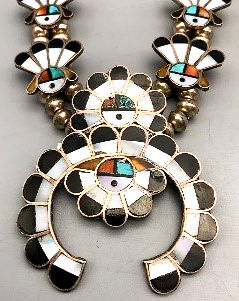

Traditionally, the face is crafted from white mother-of-pearl or shell, with black jet or onyx used for the eyes, emphasizing harmony and balance. In Zuni jewelry, each material carries spiritual significance: turquoise symbolizes Father Sky, coral represents Mother Earth, and the contrast of white shell and black jet reflects equilibrium. Surrounding the face are often petal- or feather-like rays symbolizing sunlight. When the rays feature black tips, they represent eagle feathers, which hold deep spiritual meaning in Native American cultures, especially among the Zuni and Hopi peoples. Together, the Sunface and eagle feathers embody a powerful blend of life, wisdom, strength, honor, and connection to the Creator.
Today, the Sunface remains one of the most recognizable and meaningful symbols in Zuni art and culture. Passed down through generations, it serves not only as a beautiful artistic design but also as a reminder of the deep spiritual connection between people, nature, and the cycles of life. The symbol reflects gratitude for the sun’s warmth, guidance, and life-giving energy, while honoring the traditions and beliefs of the Zuni people.

In many forms of Native American art, the Sunface continues to represent harmony, balance, protection, and renewal. Its enduring presence in jewelry, pottery, and decorative artwork speaks to the lasting importance of cultural heritage and the continued respect for the natural world. For many, wearing or displaying the Sunface is believed to invite positivity, peace, strength, and well-being into everyday life while celebrating the timeless wisdom and artistry of the Zuni tradition. The Sunface symbol is traditionally designed with a circular face, narrow rectangular eyes, a small round mouth, and a forehead divided into two sections—often featuring coral on one side and turquoise on the other. This split represents the balance between sunrise and sunset, while also symbolizing the connection between individuality and family unity.
Among the Zuni people, the Sunface is most commonly expressed through intricate inlaid jewelry. Traditional materials include mother-of-pearl, jet, coral, and turquoise, each carrying its own spiritual significance. Coral is associated with protection and comfort, while turquoise represents harmony between the physical and spiritual worlds. Mother-of-pearl, commonly used for the face itself, symbolizes intuition and imagination, and jet is used to define the facial details. The surrounding petals or rays are often crafted from turquoise or a combination of turquoise and jet, representing the sun’s radiant energy.

The Sunface remains one of the most treasured symbols in Native American art and culture because it honors the sun as a source of life, balance, positivity, and spiritual strength. If you are interested in Native American Art and culture, consider visiting Tanner Tradition in Ruidoso, NM where you can learn more about Zuni and the other pueblo peoples. You can also purchase items from their website.


Comments