
Zozobra in Santa Fe History, Myth, and the Fire Spirit Behind the Tradition

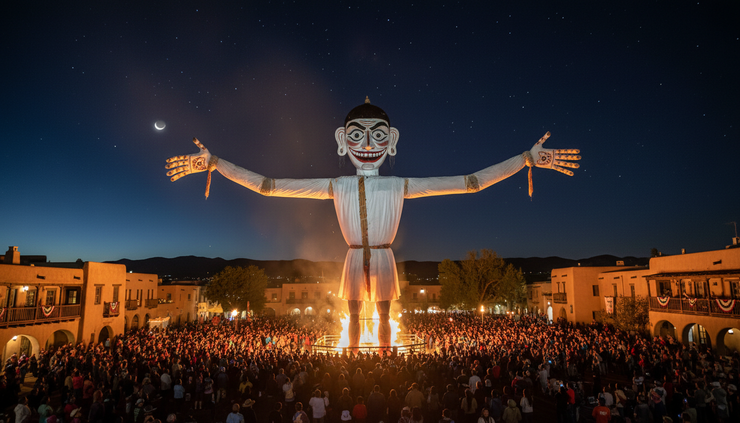
Every year in Santa Fe, a towering white figure groans above a crowd, waves its long arms, and goes up in flames. The city cheers, not because it loves destruction, but because it has gathered to burn away gloom.
That figure is Zozobra, also known as Old Man Gloom. Part puppet, part public ritual, part community theater, Zozobra has become one of New Mexico’s most recognizable traditions. The annual burning marks a dramatic release of worry, regret, and bad luck before the start of the Fiestas de Santa Fe.
The tradition began with artists, local myth, and a bold act of imagination. Over time, it grew into a ceremony that blends humor, fear, spectacle, and renewal. To understand Zozobra in Santa Fe, you have to start with the people who made the city a center for art in the early 20th century, especially Will Shuster and the circle known as Los Cinco Pintores.
Zozobra began as an artist’s answer to gloom
Zozobra did not start as a polished civic festival. It began as an idea among artists who were drawn to Santa Fe’s landscape, cultures, and creative freedom in the 1920s.
At the center of the story was William Howard “Will” Shuster Jr., a painter and printmaker who came to New Mexico after serving in World War I. Like many artists of his generation, Shuster was looking for a place where art could feel less confined by East Coast and European rules. Santa Fe offered bright light, adobe architecture, Indigenous and Hispano traditions, and a small but active creative community.
Shuster became one of the founding members of Los Cinco Pintores, Spanish for “The Five Painters.” The group formed in 1921 and included:
Will Shuster
Jozef Bakos
Fremont Ellis
Walter Mruk
Willard Nash
Los Cinco Pintores helped shape Santa Fe’s image as an art town. They were not just painters hanging work on walls. They built studios, hosted gatherings, staged creative events, and promoted a more modern artistic identity for the city.
Their influence matters because Zozobra was born from that same spirit. It was theatrical, handmade, irreverent, and rooted in place. It treated public celebration as a form of art.
Shuster drew inspiration from many sources, including local festival culture and reports of ritual burnings connected to Holy Week traditions in Mexico and among Yaqui communities. In those customs, effigies could represent Judas, evil, or other forces that needed to be cast out. Shuster adapted the broad idea of burning a symbolic figure, but he gave it a distinctly Santa Fe identity.
His creation would not represent one villain from scripture. It would represent something everyone knew: gloom.
The Christmas Eve story that sparked Old Man Gloom
Local accounts often point to Christmas Eve 1923 as a turning point in the birth of Zozobra. The story varies in its telling, as local legends often do, but the heart of it is consistent.
Shuster and friends were gathered during the holiday season, reflecting on the troubles, irritations, disappointments, and bad feelings of the year. Santa Fe at the time was small, creative, and social, but not free from conflict. Artists argued, community groups disagreed, and personal worries piled up just as they do anywhere.
Out of that mood came a simple but powerful idea: what if people could gather their gloom, place it into a figure, and burn it?
The idea had humor in it, but it also carried emotional weight. A person can laugh at bad luck more easily after giving it a face. A community can move forward more easily after creating a shared ending to the past year’s burdens.
Shuster’s imagined figure became Old Man Gloom, a tall, moaning puppet filled with worries both private and public. People could write down their troubles and send them to be placed inside the effigy. When Zozobra burned, those troubles burned with him.
This act is one reason the event has lasted. Zozobra is not only something to watch. It gives people something to do with fear, grief, frustration, and regret.

How Zozobra got his name and his mythology
The name Zozobra comes from Spanish. The word can suggest anxiety, unease, anguish, or a troubled state of mind. It is a feeling of being unsettled, burdened, or thrown off balance.
That made it the perfect name for Shuster’s creation.
Zozobra is not simply a monster. He is the personification of gloom. He feeds on worry. He thrives on human distress. His long arms, huge head, moving mouth, and eerie groans turn an invisible feeling into something physical and ridiculous.
That mix is key. If Zozobra were only frightening, the tradition might feel grim. If he were only funny, the release would not feel as strong. Instead, he is both. He is absurd and unsettling. He is theatrical and emotional. He is a giant puppet, but for one night he becomes the year’s accumulated burden.
Old Man Gloom gives fear a body
The mythology around Zozobra works because it follows an old human pattern. Communities around the world have used masks, effigies, fires, parades, and mock villains to help people mark transitions. Winter gives way to spring. A hard year ends. A festival begins. What is stale or harmful must be driven out.
In Santa Fe, that figure is Old Man Gloom.
His story is simple enough for children to understand and large enough for adults to feel. Everyone has something they want to leave behind. Zozobra gives that private wish a public form.
Tío Coco and the older shadow behind Zozobra
Zozobra is also connected to Tío Coco, a bogeyman figure known in parts of Spanish-speaking folklore. Tío Coco, sometimes related to El Coco or El Cuco traditions, was the kind of frightening character adults might invoke in cautionary tales for children.
Shuster drew from this kind of folk fear when shaping Zozobra’s personality. Old Man Gloom has the exaggerated face and menacing presence of a childhood nightmare. He is not a realistic villain. He is fear made theatrical.
That connection to Tío Coco helps explain why Zozobra feels older than the 1920s, even though Shuster created the modern tradition. The event carries echoes of folk tales, seasonal rites, and morality plays, then filters them through Santa Fe’s art scene.
The first public burning changed a private idea into a city ritual
The earliest Zozobra was smaller and more informal than the giant figure known today. Shuster first staged the burning among friends, using the event as a creative way to destroy gloom and close one emotional chapter before opening another.
The first public burning came soon after, when Zozobra joined the wider celebration around the Fiestas de Santa Fe. By moving from a private artist gathering into public space, the event changed in meaning. It no longer belonged only to Shuster and his circle. It belonged to the city.
That public version established several features that still define the tradition:
A giant effigy of Old Man Gloom
Notes, papers, and symbols of personal worry placed inside
A dramatic performance before the burning
A crowd that participates through sound, anticipation, and release
Fire as the final act of transformation
The burning eventually became associated with Fort Marcy Park, where crowds gather to watch Zozobra moan, resist, and fall to the flames. The modern event is carefully organized, but it still keeps the feeling of handmade drama that shaped the original.
Zozobra’s changing size also tells part of the story. What began as an artist’s effigy became a towering figure. As the puppet grew, so did the event’s role in Santa Fe’s identity.

The Fire Spirit turns the burning into a battle
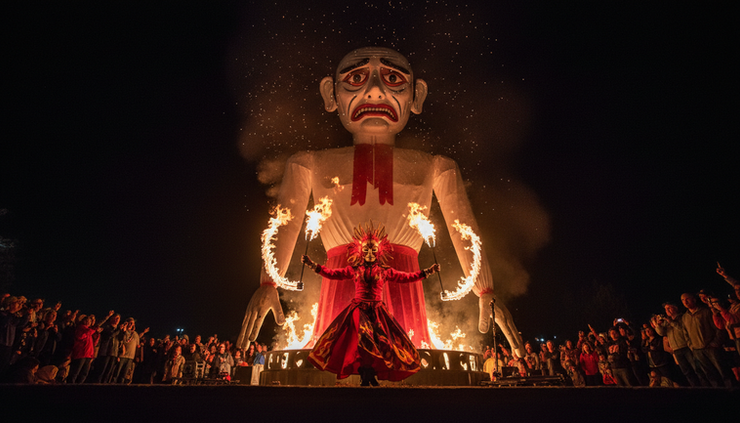
Zozobra does not simply stand there and burn. The ceremony gives him an opponent: the Fire Spirit.
The Fire Spirit is one of the most memorable parts of the tradition. Dressed in red and moving with dance-like force, the Fire Spirit appears as the champion of light, heat, and release. In the performance, Zozobra snarls and groans. The crowd calls for his defeat. The Fire Spirit confronts him and brings the flame that will end his reign.
This matters because ritual needs drama. If the goal is to burn gloom, the gloom must fight back. Zozobra’s resistance makes the final moment feel earned.
The Fire Spirit also brings balance to the symbolism. Zozobra represents anxiety, dread, and the weight of accumulated trouble. The Fire Spirit represents energy, courage, and cleansing. Their conflict gives the event a clear emotional arc.
The crowd understands the story without needing a script:
Gloom has gathered.
Gloom has taken form.
Gloom threatens the community.
Fire challenges gloom.
Gloom burns.
The community cheers and enters the festival renewed.
That structure is why the burning can feel both playful and serious. People know they are watching a performance, yet the release can still feel real.
Why Zozobra still matters in Santa Fe
Zozobra has endured because it does more than entertain. It gives Santa Fe a shared ritual that is local, artistic, and emotionally direct.
The event also reflects the layered cultural history of the city. It draws from Spanish language, Hispano and Mexican folk motifs, public fiesta traditions, modern art, and the creative experiments of early 20th-century Santa Fe. It does not fit neatly into one category. That complexity is part of its identity.
At the same time, Zozobra has raised thoughtful questions over the years about cultural borrowing, public memory, and how traditions change. Shuster was an Anglo artist working in a place shaped by Indigenous, Hispano, Mexican, and Spanish colonial histories. The modern tradition exists because of that mixture, and understanding it means recognizing both creativity and complexity.
What keeps the event meaningful is the way Santa Fe has continued to claim, reshape, and sustain it. Civic groups, artists, volunteers, families, and generations of attendees have turned Zozobra from one artist’s idea into a living community custom.
Los Cinco Pintores left more than paintings behind
The influence of Los Cinco Pintores can still be felt in how Zozobra works. The event treats art as public life. It uses scale, movement, costume, sound, and fire. It invites participation rather than quiet observation.
That is a very different model from art as something preserved behind glass. Zozobra is temporary by design. Months of planning and construction end in a few minutes of flame. The artwork disappears, and that disappearance is the point.
The burning says that some things should not be kept. Some burdens should be named, mocked, and released.
The legacy is emotional as much as historical
For many people, Zozobra is tied to memory. Parents bring children. Former residents return. Friends write down worries. Visitors encounter a tradition that feels unlike any standard festival attraction.
Its legacy lives in several ways:
As civic identity
Zozobra is one of Santa Fe’s signature public events.
As folk theater
The burning uses character, conflict, costume, sound, and spectacle.
As emotional release
The ritual gives people a symbolic way to let go of hardship.
As living art
Each year’s Zozobra is built to be seen, feared, laughed at, and destroyed.
As historical memory
The event keeps Will Shuster and the Santa Fe art movement in public conversation.
Zozobra’s power comes from turning gloom into a shared story
Zozobra began with Will Shuster, Los Cinco Pintores, and the artistic energy of 1920s Santa Fe. It drew from folk belief, seasonal burning customs, the shadow of Tío Coco, and the Spanish word for anxious unease. It found its public power when Old Man Gloom moved from a private artist gathering into the life of the city.
A century later, the figure still works because the idea is simple and durable. Everyone knows gloom. Everyone understands the desire to watch it burn.
The Fire Spirit may light the flame, but the real force behind the tradition is the crowd’s shared wish to begin again. That is why Zozobra remains more than a festival spectacle. It is Santa Fe’s annual reminder that even sorrow, worry, and bad luck can be gathered up, given a face, and sent into the fire.


Comments