
How Horses became part of the American West


Horses have a long and fascinating history in North America; one filled with surprising twists that many Americans may not know. Horses first evolved in North America millions of years ago, but they disappeared from the continent around 10,000 to 12,000 years ago. They did not return until thousands of years later, when Spanish explorers and settlers brought horses to the Americas in the late 15th and 16th centuries. However, new archaeological evidence suggests that Indigenous peoples were incorporating horses into their lives earlier than many historians once believed.
Three horse remains discovered in Wyoming, Kansas, and New Mexico date to before the Pueblo Revolt of 1680, offering intriguing evidence of the relationship between Native Americans and horses. Researchers found signs that these animals may have been cared for and handled by people rather than simply roaming freely. Dental damage on one horse and bony growths on another’s skull suggest that bridles may have been used. Chemical analysis of the horses’ teeth also revealed evidence of maize, an Indigenous crop, in their diets. Another horse had a healed facial fracture, raising the possibility that it received some form of veterinary care.
DNA’s Role
To learn more about these animals’ origins, researchers compared their DNA with that of modern horses. The results revealed that the ancient horses had predominantly Spanish ancestry. Together, these findings suggest that horses spread from Spanish settlements in the American Southwest to the northern Rocky Mountains and central Great Plains by the first half of the 17th century.
These discoveries offer a fascinating glimpse into the early relationship between Indigenous communities and horses, suggesting that this history may be more complex than previously understood.

The research suggests that horses may have spread throughout North America along Native American social networks, moving between Indigenous communities through trade, travel, and established relationships. These findings also highlight the importance of Indigenous oral traditions in understanding history. For generations, Native American cultures have passed down knowledge, experiences, and historical events through storytelling and oral accounts. Yet, Indigenous perspectives have too often been overlooked, with history told about Native peoples rather than alongside them. Including these voices is an essential piece of the historical puzzle, helping create a more complete and accurate understanding of the past.
Spain’s Expansion into North America
Horses returned to the Americas with Christopher Columbus’s second voyage in 1493, when he brought Iberian horses to the Caribbean. As Spain expanded its empire throughout the Americas, colonial authorities often restricted Indigenous peoples’ access to horses, recognizing their potential military advantage. Horses offered greater mobility, transformed hunting and travel, and could provide a significant advantage in warfare. Had Indigenous nations gained access to horses earlier and under different circumstances, the balance of power between Native communities and Spanish colonizers might have unfolded very differently.

New Mexico played an important role in the spread of horses throughout the American Southwest and beyond. In 1598, Spanish colonist Juan de Oñate led an expedition into the region, establishing the beginnings of permanent Spanish colonization along the Rio Grande Valley. Spanish settlements grew in the decades that followed, bringing horses into the region in increasing numbers.
As horses became more established in Spanish communities, Indigenous peoples—including the Apache, Navajo, and Comanche—began acquiring them through various means, including raids on Spanish settlements and corrals. From there, horses gradually spread among Native American communities through trade, raiding, and established social networks.
Who had Horses first?
Exactly which Indigenous nation first acquired and widely adopted horses remains uncertain. The Apache are often credited with obtaining horses early, while other accounts emphasize the Comanche. What is clear is that Indigenous peoples quickly recognized the animals’ value and incorporated them into their ways of life. Over time, horses transformed travel, hunting, trade, and warfare, becoming an important part of many Native American cultures.

On August 10, 1680, the Pueblo peoples of New Mexico united in a coordinated uprising against Spanish colonial rule, an event now known as the Pueblo Revolt. The revolt resulted in the deaths of hundreds of Spanish colonists and forced the surviving Spanish settlers to retreat south to El Paso. As the Spanish withdrew from their settlements, horses may have been left behind or dispersed throughout the region. Although the extent to which these events contributed to the spread of horses remains uncertain, the revolt occurred during a pivotal period in the growing relationship between Indigenous communities and horses.
Horses proved invaluable
What began as a struggle for freedom from Spanish rule would become an important turning point in the history of the American West. As horses gradually spread from New Mexico into neighboring regions, Indigenous peoples embraced the animals and adapted them to their own ways of life. Navajo, Apache, Comanche, Kiowa, Cheyenne, Arapaho, Lakota, and other Indigenous nations incorporated horses into their cultures, transforming travel, hunting, trade, and warfare. Over time, many became renowned for their horsemanship and the central role horses played in their communities. The rise of these celebrated horse cultures was not the result of a single event, but rather a gradual transformation shaped by Indigenous knowledge, adaptation, and networks of exchange that carried horses across the continent.
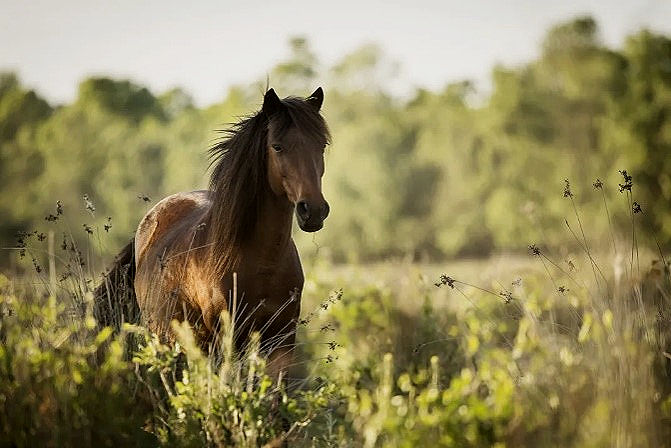
The role of horses has evolved significantly over time, reflecting changes in human society and technology. Initially, horses were primarily used for transportation, enabling faster movement across distances. This facilitated trade and communication, shaping civilizations. Then they played a crucial role in agriculture, helping with plowing and other labor-intensive tasks, which increased productivity.
Today, many horses are kept for recreational purposes, including equestrian sports, racing, and leisure riding. This shift reflects a change from utilitarian to companion roles. Horses are now also involved in therapeutic programs, aiding in physical and emotional healing for various populations. Horses have influenced art, literature, and culture, symbolizing freedom, power, and grace throughout history.
Overall, while horses were once essential for labor and transportation, their roles have diversified, emphasizing companionship, sport, and therapy in contemporary society. As of recent estimates, there are approximately 7.25 million horses in the U.S. It is estimated that the horse industry contributes approximately $122 billion annually to the U.S. economy.


Comments