
Hopi Silversmithing

In silversmithing, Hopis are best known for their intricate overlay designs. These designs are cut out entirely free hand from either Sterling Silver or gold. The subject matter that they select can range from simple symbols, including rain clouds, to extremely intricate scenes that depict Kachina dances, Kivas, storm clouds, lightning, and or pueblo buildings.


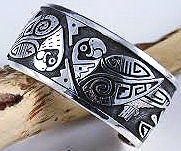
Hopi silversmithing is renowned for this highly distinct style of sterling silver jewelry that was developed in the late 1930s and 1940s. Overlay technique relies on two layers of silver: a top layer cut out with a jewelry saw, and a bottom layer that is oxidized and textured, allowing the deep background to show through.


After the design is cut and the rough edges smoothed, the two pieces are soldered together with silver solder, flux and a torch, the solid one and the one with the cut design. The flux allows the solder to flow evenly over the silver, creating a smooth finish. The bond is permanent, but the inlay effect requires another process.
The piece is then dipped in a chemical compound, Liver of Sulphur, that oxidizes the silver and gives it a black appearance. After the silver is oxidized, it is placed in a boric acid solution to remove the excess Liver of Sulphur and clean off any imperfections and any leftover flux that was used to bond the two pieces together.
Unlike Navajo or Zuni jewelry, which often feature turquoise or other semi-precious stone settings, Hopi work relies on the brilliance of the silver and the intricacy of the cut design. The overlay designs are heavily symbolic and secular, often influenced by Kachina (Katsina) figures, ancient petroglyphs, pottery shards, and elements of the natural world. Hopi pieces are rarely signed with a name. Instead, artists stamp their work with an individual personalized, village, or clan hallmark.
Hallmarks
The petroglyphs found throughout the Hopi Mesas tell the story of a people who have lived there for more than a thousand years. Many of the symbols depicted in these carvings represent Hopi clans and hold deep spiritual significance. Given their sacred nature, it is not surprising that these symbols also appear prominently in Hopi art. The Hopi maintain a strong cultural and spiritual connection to these traditional images, making them a natural choice for use as silversmith hallmarks.
Many Hopi silversmiths identify their work with symbolic hallmarks rather than names or initials. Common hallmarks include clan-related symbols as well as images associated with agriculture and the natural world, such as the sun, water, and corn. This practice differs significantly from that of many Navajo and Zuni silversmiths, who more commonly use full names or initials as maker's marks.

Tanner Tradition in Ruidoso, NM has Hopi jewelry for sale in their gallery.


Comments