
Exploring the history of New Mexican Cuisine: Red, Green and Christmas Chile Traditions


Ask for chile in New Mexico and the question comes back fast: red, green, or Christmas? That choice is more than a preference. It is one of the clearest ways to understand New Mexican cuisine, a food tradition built on chile, corn, beans, squash, smoke, warmth, and a deep sense of place.
New Mexican food is often confused with Tex-Mex or northern Mexican cooking, but it has its own identity. It carries Pueblo, Hispano, Mexican, Spanish, and other regional influences, shaped by high desert farming, family kitchens, and local crops. The flavors are direct and memorable: earthy red chile, roasted green chile, blue corn, pinto beans, posole, pork, cheese, flour tortillas, and sopapillas with honey.
At the center of it all is chile. Not chili powder. Not generic hot sauce. Chile, usually spelled with an “e” in New Mexico, is the ingredient that decides the plate.
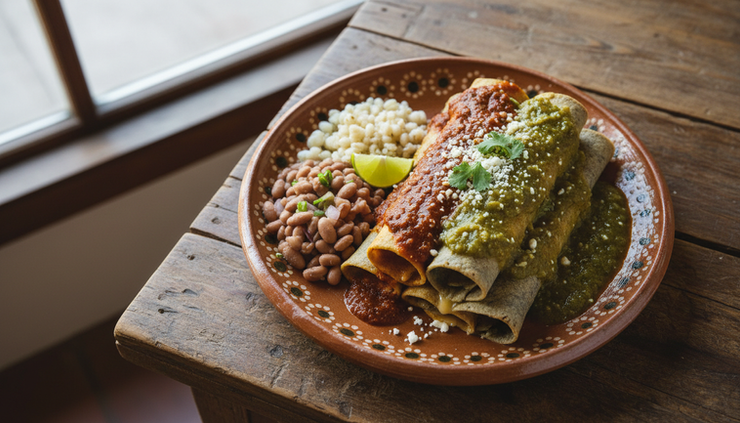
The flavor foundation of New Mexican cooking
New Mexican cuisine starts with ingredients that make sense in the high desert. Corn, beans, and squash have long been central foods in the region. Blue corn appears in tortillas, enchiladas, pancakes, and atole. Pinto beans show up as a daily staple, often simmered simply and served whole or refried. Squash may become calabacitas, a comforting dish with corn, onion, and chile.
Then come the ingredients that give the cuisine its particular rhythm:
Chile
Red and green chile define sauces, stews, marinades, and everyday meals.
Posole
Dried hominy, often cooked with pork and chile, brings chewy texture and mild corn flavor.
Pork
It appears in carne adovada, tamales, posole, and stews.
Cheese
Melted cheese softens the heat in enchiladas, rellenos, and burritos.
Flour tortillas
Large, soft tortillas wrap breakfast burritos or scoop beans and chile.
Sopapillas
Puffy fried bread often lands at the table near the end of a meal, though many people use it to chase sauce from the plate.
The food is rich without being fussy. Sauces matter, but they do not hide the main ingredients. A bowl of green chile stew tastes like roasted chile, potato, pork, and broth. A plate of red chile enchiladas tastes like dried chile pods, garlic, and corn tortillas. The pleasure comes from clarity.
Team Red brings sweetness, smoke, and slow-cooked depth
Team Red belongs to those who love a rounder, deeper chile flavor. Red chile starts as fully ripened chile pods. Once dried, the pods take on flavors that can be earthy, sweet, smoky, fruity, and sometimes raisin-like. The heat varies, but red chile often feels warmer and more lingering than sharp.
Traditional red chile sauce usually begins with dried pods. Cooks remove stems and seeds, rinse the pods, and soften them in hot water. The softened chile is blended with garlic, salt, and sometimes a little oregano or onion. The sauce is then strained and simmered until it thickens and loses any raw edge.
Some kitchens use ground red chile powder, especially for speed, but the goal stays the same: a smooth sauce with body, color, and depth.
Popular Team Red dishes include:
Carne adovada
Pork is marinated in red chile, garlic, and spices, then cooked low and slow until tender. The chile soaks into the meat and creates a rich, brick-red sauce. It often appears with beans, rice, eggs, or stuffed into a burrito.
Red chile enchiladas
Corn tortillas are dipped or layered with red chile sauce, cheese, onion, and sometimes an egg on top. Stacked enchiladas are common in New Mexico, giving the dish a hearty, casserole-like feel without turning it into one.
Tamales with red chile pork
Masa is spread on corn husks, filled with red chile pork, folded, and steamed. Around holidays, tamales become a group project, with family members spreading, filling, folding, and packing them into pots.
Posole with red chile
Posole can be served with red chile stirred into the broth or offered on the side. The deep chile flavor works well with pork and hominy, especially in cold weather.
Team Red is what many people crave when they want comfort. It is the chile of slow braises, holiday kitchens, and plates where the sauce stains the tortilla and the beans in the best possible way.

Team Green brings freshness, fire, and roasted flavor
Team Green has a different personality. Green chile is harvested before it fully ripens to red. It tastes brighter, fresher, more vegetal, and often more immediate. When roasted, the chile skins blister and blacken, adding smoke while the flesh turns soft and fragrant.
That roasting step is part of the experience. In late summer and early fall, the smell of roasting green chile drifts outside markets, roadside stands, and grocery stores across New Mexico. Large metal drum roasters tumble the chiles over flame until the skins char. People buy them by the bag or sack, then take them home to peel, chop, freeze, and save for the year.
Green chile can taste grassy, sharp, buttery, or intensely hot depending on the variety, growing conditions, and harvest. The famous Hatch Valley is closely linked with green chile, though excellent chiles grow in other parts of the state as well. The point is not just heat. The point is the roasted flavor.
Popular Team Green dishes include:
Green chile stew
A classic version includes chopped roasted green chile, pork, potatoes, onion, garlic, and broth. Some versions use beef or chicken. The stew is simple, but the chile gives it lift, heat, and aroma.
Chile rellenos
Whole roasted green chiles are peeled, stuffed with cheese, dipped in batter, and fried until golden. A good relleno balances the soft chile, melted cheese, and crisp coating.
Green chile cheeseburgers
This dish has become one of New Mexico’s best-known contributions to American food. Roasted chopped green chile adds heat and smoke to a cheeseburger without turning it into a novelty.
Breakfast burritos with green chile
Eggs, potatoes, cheese, and bacon or sausage get wrapped in a flour tortilla, then filled or smothered with green chile. The chile cuts through the richness and wakes up the whole burrito.
Green chile chicken enchiladas
Shredded chicken, cheese, tortillas, and green chile sauce make a brighter, tangier version of enchiladas than the red chile style.
Team Green is lively. It brings snap to rich foods and makes simple dishes feel alive. If Team Red is low and slow, Team Green is flame, peel, chop, and eat.
Team Christmas gives both chiles a place on the plate
When someone asks for “Christmas” in New Mexico, they are not asking for a holiday menu. They are asking for both red and green chile on the same dish. The name comes from the colors, and it has become one of the state’s most beloved food terms.
Christmas style works because red and green chile bring different strengths. Red chile has depth, sweetness, and earthiness. Green chile has brightness, roast, and fresh heat. Together, they create contrast on one plate.
Common Christmas dishes include:
Enchiladas with red sauce on one side and green on the other
Burritos smothered with both sauces
Huevos rancheros split between red and green chile
Tamales served with a spoonful of each sauce
Chile rellenos plated with red chile and extra green chile on top
Christmas is also a smart choice for first-timers. It gives a clear side-by-side taste of the two chile traditions. One bite may lean smoky and sweet. The next may taste green, sharp, and roasted.
It is not unusual for loyalties to shift by dish. Someone may choose red with carne adovada, green with eggs, and Christmas with enchiladas. The question is playful, but people take their answers seriously.

Chile carries history, memory, and local pride
Chile’s role in New Mexican culture did not happen by accident. Pueblo communities cultivated corn, beans, and squash long before Spanish colonization. Chile arrived through Spanish and Mexican routes and became deeply rooted in local agriculture and cooking over generations. Over time, the crop adapted to New Mexico’s climate, soils, irrigation traditions, and tastes.
The state’s chile culture also grew through families saving seeds, farmers developing prized varieties, and communities building seasonal habits around the harvest. Names like Hatch and Chimayó carry meaning because they point to place, soil, memory, and tradition. Chiles are not treated as interchangeable.
Ristras, the long strings of drying red chiles, are one of the most recognizable sights in New Mexico. They hang from portals, kitchens, markets, and doorways. They are practical, decorative, and symbolic at the same time. Fresh green chile marks the harvest season. Drying red chile points toward winter cooking.
New Mexico even has an official state question: “Red or green?” The commonly accepted answer, “Christmas,” says a lot about the local sense of humor and the importance of chile at the table.
Chile also appears during celebrations and family gatherings. At weddings, feast days, holidays, and community events, it may show up in posole, tamales, enchiladas, stews, or beans. Around Christmas, many families prepare tamales, posole, and biscochitos, the anise-scented state cookie, creating a meal where chile and tradition sit side by side.
During harvest season, chile roasting becomes a public ritual. The scent is powerful and unmistakable. It signals school starting, freezers filling, and kitchens preparing for months of meals. People debate heat levels, favorite farms, roasting spots, and whether a batch is mild enough for relatives or hot enough to be proud of.
That is why chile is not only an ingredient. It is a marker of home.
How to understand a New Mexican plate
A New Mexican plate often looks simple at first: enchiladas, beans, rice, maybe lettuce and tomato on the side. The real story sits in the sauce.
Red chile asks for slow attention. It rewards dried pods, simmering, and patient cooking. Green chile asks for fire and freshness. It rewards roasting, peeling, and a confident hand. Christmas asks why anyone should have to choose.
Together, they shape a cuisine that is earthy, direct, warm, and deeply regional. New Mexican cuisine is not defined by excess. It is defined by ingredients that repeat across generations and still feel exciting when they hit the plate.

The takeaway from red, green, and Christmas
To understand New Mexican food, start with the chile question. Red brings sweet, smoky depth. Green brings roasted freshness and fire. Christmas brings both together, not as a compromise, but as a celebration of contrast.
The best way to choose is to taste widely. Try red chile on carne adovada, green chile in stew, and Christmas on stacked enchiladas. Notice how each sauce changes the same base ingredients. That is the essence of New Mexican cooking: familiar foods transformed by chile, place, and tradition.


Comments