
Apache Burden Baskets


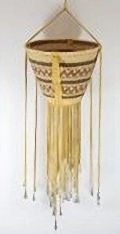
Traditional Apache burden baskets are hand-made, cone-shaped woven baskets that played an essential role in daily life. Constructed using a twined weaving technique with materials such as willow or cottonwood, the baskets are built on a strong three-rod foundation for durability. They typically feature a flat or rounded bottom and are reinforced at the rim with leather wrapping to provide additional support and longevity.
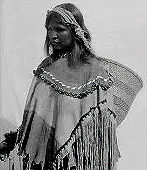
Burden baskets were designed to be carried on the back, supported by buckskin or leather straps worn across the forehead. Decorative leather strips adorned with small tin cones—often cut from recycled cans—hang from the basket and produce a distinctive jingling sound when the basket is moved or when caught by the wind. While decorative, these jingles served important practical purposes: their sound helped deter snakes and other animals during gathering and allowed adults to keep track of children working nearby or members of a gathering party moving through the landscape.

Jingles are pictured above. They have been made from tin or aluminum cans.
The baskets were used for a wide range of tasks, including gathering and carrying firewood, roots, berries, and harvested crops, and were especially vital for people traveling from camp to camp or returning from trading posts. Due to their size, burden baskets were not typically used for food storage, as larger basket forms were better suited for that purpose. Some baskets were coated with pine sap and layered with bark, making them watertight and suitable for carrying water during long journeys.


Burden baskets are also visually distinctive. The darker woven rows are made from the outer bark, while the lighter rows come from the inner bark, creating natural patterns that reflect the materials used. Sizes vary widely, ranging from approximately 2 to 19 inches in diameter.
Beyond their practical uses, burden baskets hold deep cultural and spiritual significance. They have long been used in ceremonies such as the Sunrise Dance, where they symbolize strength, patience, endurance, and the act of leaving worries behind. Traditionally, visitors were encouraged to symbolically place their burdens in the basket before entering a home.

The knowledge of basket making itself is considered sacred and has been passed down through generations, taught by elders who received the gift from those before them. Today, burden baskets continue to be made for ceremonial use, artistic expression, and resale, remaining vital cultural symbols of Apache life.

Burden baskets:
· Are used in the traditional puberty rite for young girls during the Sunrise Ceremony
Are a Symbol of Hospitality inviting visitors to place their "burdens" (worries) in these baskets which are hung outside before entering a home, giving rise to the phrase "leave your burdens at the door"
Reflect a deep sense of self-reliance and respect for the household's peace and privacy when placed outside the home at the door
Are a Symbol of Pride and the Apache identity and a significant cultural symbol of Apache skill
Modern Context
Burden Baskets are an art form. While still made for ceremonial and decorative purposes, many are now created for sale, though the tradition is carried on by a few dedicated weavers.
Preserving this craft is important, as fewer young people learn the time-intensive skill.
They can be purchased at fine Native American art retailers such as Tanner Tradition, in Ruidoso, NM.


Comments