
Exploring the Fascinating History of Concho Belts
- Barbara Behrens

- Mar 7
- 6 min read

Concho belts, originating in the late 1860s, are a classic form of Navajo (Diné) jewelry blending Spanish/Mexican silver traditions with Southern Plains Indian aesthetics. Named from the Spanish word concha ("shell"), these belts evolved from simple, stamped silver discs (First Phase) into ornate designs incorporating solder, "butterfly" spacers, and turquoise (Third Phase).
Key Historical Phases and Development
Origins (1860s–1880s): Navajo silversmiths began crafting, often credited to artisan Arsidi Chon (also spelled Atsidi Chon, meaning "Ugly Smith") was a pioneering 19th-century Navajo silversmith credited with creating the first Native American concho belt in the late 1860s. A prominent early artisan, he is recognized for producing "First Phase" style jewelry, often using hammered pesos, and for introducing turquoise into Navajo silverwork.
Key Facts About Arsidi Chon (Ugly Smith):
Innovator of the Concha Belt: He is widely regarded as the creator of the first concho (or concha) belt, which became a staple of Southwestern style, often featuring round, hand-hammered silver discs.
"Ugly Smith" Alias: His name, often cited as Atsidi Chon, translates to "Ugly Smith".
Early Silversmithing: Working during the initial era of Navajo silverwork, he is associated with the 1860s-1870s, making him one of the earliest practitioners of the craft.
Influence on Technique: He taught other significant Navajo silversmiths, including Slender Maker of Silver, and is known for early experimentation with setting turquoise in silver.
Trade with Zuni: In 1872, he taught Zuni blacksmiths the skills of working with silver.
Not to be Confused with Atsidi Sani: While both were pioneering early Navajo smiths (Atsidi Sani is considered the first, and sometimes referred to as "Old Smith" or "Ironworker"), Arsidi Chon/Atsidi Chon ("Ugly Smith") is a distinct individual often associated with the very first concho belt,
Early conchos were made from melted-down U.S. silver dollars or Mexican pesos and featured simple, stamped, rounded, or oval domes.
First Phase (1860s–1880s): Characterized by large, heavy, plain silver disks with stamped designs and rectangular, punched-out center slots for leather straps to pass through.
Second Phase (Late 1800s): Introduced soldering techniques, allowing for silver loops on the back of the conchos, which secured them to the belt without damaging the metal.
Third Phase (Early 1900s): Introduced turquoise and other stones, with more intricate repoussé ("bump-out") designs. This era also saw the popular addition of small vertical rectangles known as "butterflies" between the main conchos.
Evolution and Cultural Impact
Influences: The concept was heavily influenced by Plains Indian "hair plates"—round silver or German silver plates worn in the hair or on belts—and Spanish/Mexican bridle decorations.
Materials: Originally made from ingot silver or melted coins, contemporary, high-quality pieces are typically crafted from sterling silver.
Cultural Significance: Beyond fashion, these belts became a major symbol of Southwestern Native American art and a key item for personal adornment and cultural identity.
Modern Era: By the 1950s and beyond, they became popular in mainstream Western fashion and, in the 1960s/70s, were adopted by rock performers like Jimi Hendrix and Jim Morrison.
Today, the concho belt remains a highly regarded, versatile piece of art, often ranging in design from traditional, simple styles to complex, stone-heavy masterpieces created by Navajo, Hopi, and Zuni artisans.
Atsidi Sani (Navajo: Atsidii Sání) (c. 1830 – c. 1870 or 1918) was the first known Navajo silversmith.

The First Concho Belt: He is credited with creating the first Southwestern concho belt around 1868 or 1869, which Atsidi Sani handmade using hammered Mexican silver pesos.
Turquoise Integration: Shortly after Atsidi Sani began silversmithing, he taught his sons what he had learned, and the craft spread across the area. Zuni silver work appeared around 1872.
The Zuni, were already skilled at working with metal and stones, reportedly paid “one good horse” for the silver teachings of Atsidi Chon. Incorporating their earlier skills, Zuni silver work took on the fine and channel inlay now associated with Zuni jewelry. After learning silver work from Atsidi Chon, Lanyade was recognized as the first Zuni silversmith, having learned the craft around 1872. He then traveled to various pueblos selling his jewelry. While on Hopi First Mesa at Sichomovi, AZ he taught Sikyatala, the first Hopi silversmith what he had learned.
During this time, different techniques were learned and developed. Soldering provided a new window into artistic design and the setting of stones into the jewelry. Silver dies were adopted from the Spanish, Mexican and later Indian leather work. Each pueblo and its artists began to develop their own unique styles and learned how to combine what they knew and expand upon it. The Hopi developed the “overlay” technique that pulled designs from pottery shards found in 15th and 16th century ruins to inspire their silver-layering work. These works showed primarily kachinas, animal and clan motifs.


Phases of Early Concho Belts
FIRST PHASE:
The evolution of the concho belt in the Southwest unfolded in distinct phases, each marked by innovation. The First Phase style, attributed to a Navajo artisan known as Arsidi Sani (Ugly Smith), emerged in the late 1860s. The earliest conchos were round, light silver that was hand hammered from Mexican silver pesos.
They boasted simplicity and functionality, with diamond-shaped cutouts and a center bar where the leather belt was laced through. At this time, the Navajo had not yet learned how to solder, and this was a simple, but clever solution. The decorative designs were simple as well; edges were scalloped with round decorative holes punched inside the scalloped edge. The conchos were round with diamond-shaped slots and scalloped edges, this First Phase design epitomizes the earliest stages of Navajo silversmithing.


SECOND PHASE:
The Second Phase style emerged in the 1880s, with a new advancement: the introduction of soldered copper loops. This innovation revolutionized concho design, opening up the center of the concho for decoration. Cold chisels, files, punches, and stamps became the tools of choice, enabling artisans to create more elaborate designs with precision.


THIRD PHASE:
Enter the Third Phase, characterized by a transformative infusion of turquoise. While the use of this revered stone in silverwork dates to the late 1800s, its prevalence soared in the early 1900s. In most part, this was due to the stone being scarce prior to the 1890s. Between 1900 and 1920, turquoise stones and butterfly-shaped spacers appeared along with repoussé work. Chasing and repoussé are some of the oldest techniques of silversmithing. This involves the gentle pounding from a hammer on the back of the piece and several chasing punches which are used to create outlines on the front of the piece. Volume is created in the silver from the hammer rounding out the back of the metal to give volume. When turquoise was added, this lent a vibrant allure to concho belts, embodying the essence of Southwestern aesthetics.


Further Innovations and Influence
As the 20th century unfolded, concho belts continued to evolve, mirroring the dynamic spirit of their creators. Vertical silver butterflies started to appear in the late 1910s, adding a whimsical charm to traditional designs. The Zuni often inlaid their conchos with shell. The 1920s witnessed the emergence of link concho belts. Native American artisans have continuously demonstrated their adaptability and ingenuity.
Contemporary Legacy
Today, the legacy of the concho belt endures as a beacon of Native American artistry and cultural heritage. When a silversmith aims to showcase their finest work, whether for a judged show or a discerning client, they will craft a concho belt. It is a tapestry for silverwork and artistry. For over 150 years, the concho belt remains the epitome of Southwestern Native American jewelry. Rooted in this tradition, it is now something worn all around the world by people from all walks of life.


How to Style/Wear a Concho Belt
This really depends upon YOU! Whether you decide to let your wild side speak for you or attempt to be demure, your concho belt can assist you with either side. Some prefer to let their belt reside at their waistline and others want to be a little more adventuresome by letting it sit lower on their hips. One of the great things about concho belts is that they are awesome either way. Since the conchos on leather belts can be moved, the conchos can be spaced however the wearer decides. If you have a linked concho belt, then you can decide where to hook the length so that it feels best. One of the best ways to decide what works best for you is to try one on and see for yourself. Tanner Tradition in Ruidoso, NM has a wide selection of belts to choose from.
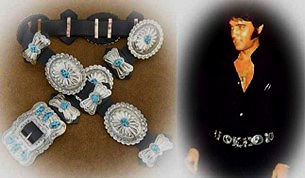
Pictures of a variety of individuals are included with them sporting their concho belts in numerous ways. Some are more casual than others, but they all look comfortable and great!




Comments